CS2 Knife Trading Guide 2026: Float, Patterns & Best P2P Trades

CS2 Knife Trading Guide 2026: Float, Patterns & Best P2P Trades
Knives are the crown jewel of every CS2 inventory. Rare, prestigious, and wildly variable in value based on a single decimal — the float. If you've tried trading a knife through Steam Market or platforms charging 5–12% fees, you know how much that chips away at your return. This guide covers everything you need to trade CS2 knives effectively in 2026: which knives hold value, how float and pattern affect price, and how to find real P2P trades without paying unnecessary commissions.
Why CS2 Knives Trade Differently Than Regular Skins
Most CS2 skins are simple to price — check the Steam Market, apply a wear multiplier, and you have a number. Knives are another game entirely.
The drop rate for a knife from a standard case sits around 0.26%, making them among the rarest items in CS2. That scarcity drives a few important consequences:
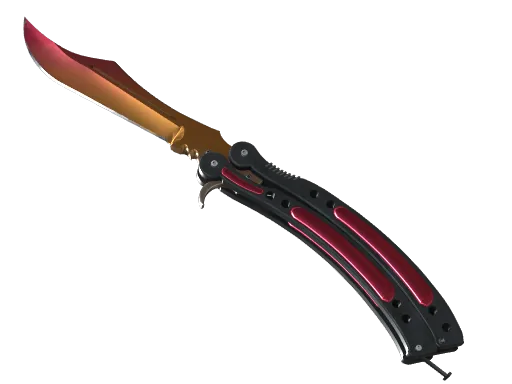
- Price gaps between wear conditions are extreme — a Factory New Fade Butterfly Knife vs. Well-Worn can differ by 60% or more
- Float values within the same condition carry real weight
- Pattern index becomes a decisive factor for specific finishes
The knife market is dominated by collectors and traders who understand these nuances intimately. Walking into a knife trade without preparation means leaving value on the table.
Float Values: Every Decimal Matters
For most skins, float is a mild tiebreaker — buyers prefer lower floats within the same wear category, but differences are modest. For knives, especially Factory New, float can shift value significantly.
Here's where it matters most:
- Karambit | Fade FN: Floats range from 0.00 to 0.07. A 0.0001 float commands a meaningful premium over 0.065 — both are Factory New, but the price gap can reach 15–25%
- M9 Bayonet | Doppler FN: Lower float means cleaner blade clarity, especially visible in phase transitions on Phase 2 and Phase 4
- Butterfly Knife | Marble Fade FN: Fire and Ice pattern with float under 0.01 can fetch 3–5× a mid-float Marble Fade of the same pattern
Before agreeing to any knife trade, always verify the exact float via a Steam inspect link. Tools like CSFloat or SteamID.io retrieve this for free. The difference between a 0.001 and 0.045 FN float can represent hundreds of dollars on premium knives.
Doppler Phases: The Market That Moves Around a Single Number
Doppler knives — available on Karambit, M9 Bayonet, Flip Knife, Gut Knife, and others — come in four standard phases plus two special variants: Ruby and Sapphire.
Phase values in 2026 (approximate, Factory New, relative to base Doppler price):
- Phase 2: Most valuable standard phase — deep blue/teal coloring, consistent demand from collectors
- Phase 4: Second most sought — purple/pink tones with strong buyer interest
- Phase 3: The "rose gold" — polarizing finish, lower baseline but favored by some collectors
- Phase 1: Least desired among standard phases, though still premium vs. non-Doppler knives
- Ruby: Full red blade, 3–4× standard Doppler price, slower to move but commands premium
- Sapphire: Full blue blade, consistently the most valuable Doppler variant — high demand, high liquidity among serious collectors
When trading Dopplers, confirm the phase visually through a direct in-game inspection or the Steam inspect link. Phase misidentification is one of the most common knife trading mistakes — screenshots can be edited or taken in misleading lighting conditions.
Pattern Index: Hidden Value in Marble Fade, Tiger Tooth, and Slaughter
For pattern-sensitive knife finishes, the pattern index (0–999) determines how the design appears on the blade. Two identical Karambit | Marble Fades at the same float can have dramatically different market values based purely on pattern.
Karambit | Marble Fade is the most pattern-sensitive knife in CS2. The "Fire and Ice" pattern — maximum red tip contrasted with blue body — can trade for 2–3× a standard Marble Fade. Community databases document premium patterns by index number. Pattern #412, #573, and similar are frequently cited as "full fire" patterns. Before trading one, cross-reference with CSFloat Market or csgostash to understand what you actually have.
Butterfly Knife | Tiger Tooth with a high pattern index shows more pronounced orange/yellow stripe coverage. High-index Tiger Tooth knives fetch 10–20% premiums over average-pattern examples.
M9 Bayonet | Slaughter patterns with high contrast between the red web and silver sections are most desirable. Full web coverage can command 30–40% over a minimal-web variant at identical float.
How to Find the Best P2P Trade for Your Knife
Steam Market takes 15%. DMarket, Skinport, CS.Money take 5–12%. On a $500 knife, that's $25–75 in fees before a trade is even complete. P2P trading cuts that out entirely.
On csboard.com, you connect directly with other CS2 traders — no platform taking a percentage of your trade value. The platform uses Steam-native trade offers, so skins move directly between inventories exactly like any standard Steam trade.
To get the best deal on a knife through P2P:
- Know your knife's value precisely. Check Steam Market, CSFloat, and Buff163 for current pricing. Note the spread between bid and ask prices.
- Have your inspect link ready. Serious traders will inspect before agreeing to any deal. Keep your inventory public.
- Post complete information on csboard.com: skin name, wear, exact float value, pattern (if relevant), and screenshots of special patterns like Fire and Ice or Sapphire phase.
- Evaluate offers without rushing. For high-value knives, patience pays — a 3–5% swing matters at $300+ values.
- Check the other trader's Steam profile. Account age, trade history, and inventory contents are all publicly visible and worth evaluating.
Most Liquid Knives for Trading in 2026
Not all knives trade equally fast. If you want your knife to function as "currency" in multi-step trades, choose items with consistent demand:
- Karambit | Fade (FN): The benchmark knife worldwide. Trades at fair value quickly in any market condition
- M9 Bayonet | Doppler Phase 2 (FN): Strong demand from EU and RU communities, moves reliably
- Butterfly Knife | Fade (FN): High recognition, especially popular in RU/CIS trader communities
- Karambit | Tiger Tooth (FN): Entry-level premium knife with consistent buyer interest
- Bayonet | Doppler Phase 4 (FN): More accessible price point with strong demand
Budget knives — Gut Knife, Falchion, Navaja, Stiletto — are harder to move via P2P since the fee savings don't justify the extra effort for buyers at lower price points. For these, Steam Market or a bot service may be more practical.
Mistakes That Cost CS2 Knife Traders Real Money
Even experienced traders fall into these traps:
- Not verifying float before the trade. A "FN Karambit | Doppler" at float 0.069 versus 0.001 are not the same item — both are technically Factory New, but the price gap can be 20%+
- Trusting screenshots over inspections. Screenshots can come from different skins. Always inspect directly via Steam or in-game before any agreement
- Overvaluing your own knife. 200 hours with a specific knife creates attachment — it doesn't add market value. Detach when evaluating trade offers
- Panic-trading during price dips. CS2 knife prices fluctuate with case updates and economy events. A 10% dip rarely justifies rushing an unfavorable trade
- Ignoring pattern premiums. Trading a Butterfly Knife | Marble Fade "Fire and Ice" at standard-pattern prices is one of the most costly mistakes in knife trading
Conclusion: Knowledge Beats Speed in Knife Trading
CS2 knife trading in 2026 rewards preparation over speed. Understand your float. Know your pattern. Use P2P to avoid bleeding value on commissions. The gap between a careful trader and an impulsive one isn't just experience — it's the research done before a trade is agreed upon.
If you're ready to find real traders for your knife without platform fees, csboard.com connects you directly with other CS2 traders. Post your knife, browse what others have, and negotiate directly — P2P trading the way it should work.
Live prices
Current market prices for the skins in this guide — updated continuously.